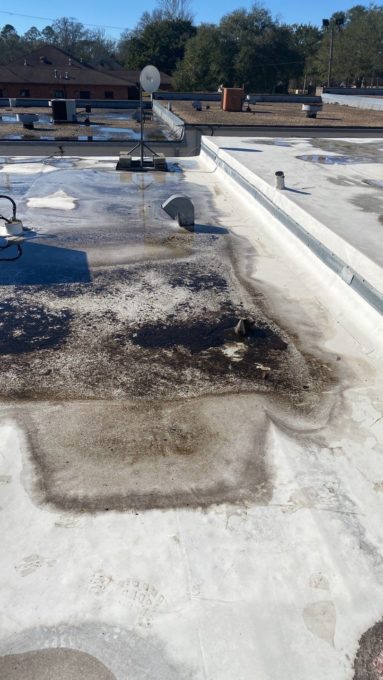
Assumptions can lead any commercial building owner into believing that excess water on your roof could be from a recent storm however, it doesn’t have to be storm season for it to appear. Air Conditioning units and other roof equipment can cause ponding water, water remaining on a roof for 48-72 hours or more, and it can lead to extreme roof damage.
Ponding Water Damages
Ponding water can lead to both minor and major damages. It’s such an issue that dead level flat roofs are no longer allowed in most structural building codes.
Damages caused by ponding water include:
- Building structural shifts, which can lead to roofing membrane damage or a collapsed roof.
- Algae and mold and plant growth, which can cause roof surface damage and clogged drains.
- Build-up of dirt contaminants, which leads to the degradation of the roof membrane.
Allowing even the smallest amount of water between the roof membrane can affect insulating qualities and rot the deck and surfaces underneath.
Detecting Ponding Water Areas
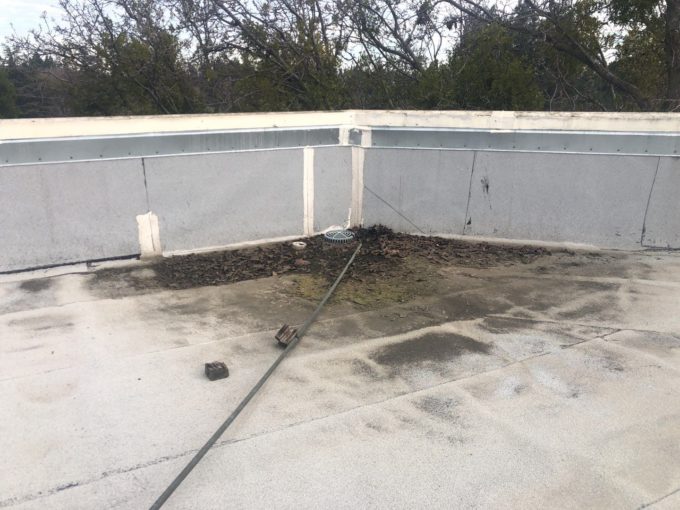
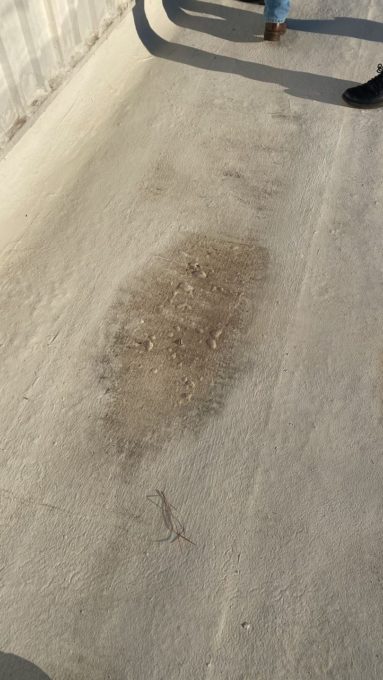
Areas of discoloration and dirt, debris or algae build-up are signs of excessive moisture as well as bubbling, peeling, cracking or oxidation of the roof surface. Don’t forget to inspect drains and waterways for signs of sitting water.
Managing Ponding Water Damage
Maintenance staff should conduct regular roof inspections and quickly address ponding water if it is found. Small amounts of ponding water is common and should be expected.
Here is how to manage severe ponding water:
- Re-pitch the roof. If ponding occurs because of improper sloping or sagging, hiring a contractor to re-pitch the roof is an option, though costly.
- Check drains for blockages. If your roof drains properly, leaves or other debris could be the culprit. Check drains regularly, which prevents water from backing up during storms.
- Install additional drains and crickets. Add more drainage if ponding water is caused by an aging, sagging roof.
- Repair low points and reinforce. If you can’t repair the entire roof, begin with repairing its low points. Remove and replace damaged materials, covering them with a high-quality reinforced acrylic waterproof coating that is designed to withstand ponding conditions.
- Work with your contractor and roofing product manufacturers. Ask for their help in determining the correct course of action to preserve the roof assembly.
Until a more permanent solution can be implemented, pay close attention to your roofs Perm Rating, which is a standard measure of the water vapor permeability of a material. A high perm rating means the material is more likely to allow water to move through it, which is what you want to avoid. Make sure your repair product is compatible with most surfaces and doesn’t lose water resistance over time.
Western Colloid Offers Roofing Inspections
We at Western Colloid are experts at spotting signs of water damage. We provide roofing inspection and solutions, which provides you with durability and protection against water damage.
Schedule a consultation with Western Colloid to find a roofing solution that works best for your needs and budget.